
Mill Valley lives under its trees. Redwoods line the creeks in the canyons below Mount Tam, oaks and madrones cover the hillsides, and bay laurels fill in everywhere else. Fog rolls in most summer mornings and keeps the canopy thick and green, which is beautiful right up until a winter storm pushes a soaked redwood limb onto a deck. Many homes sit on narrow, steep lots reached by stairs or a single-lane road, so even a routine job takes planning. And with houses tucked into the woods, fire clearing is a yearly chore for a lot of owners. Sudden oak death has hit Mill Valley's tanoaks hard too, leaving standing dead trees on many hillside lots that dry out and become both a falling hazard and fire fuel.
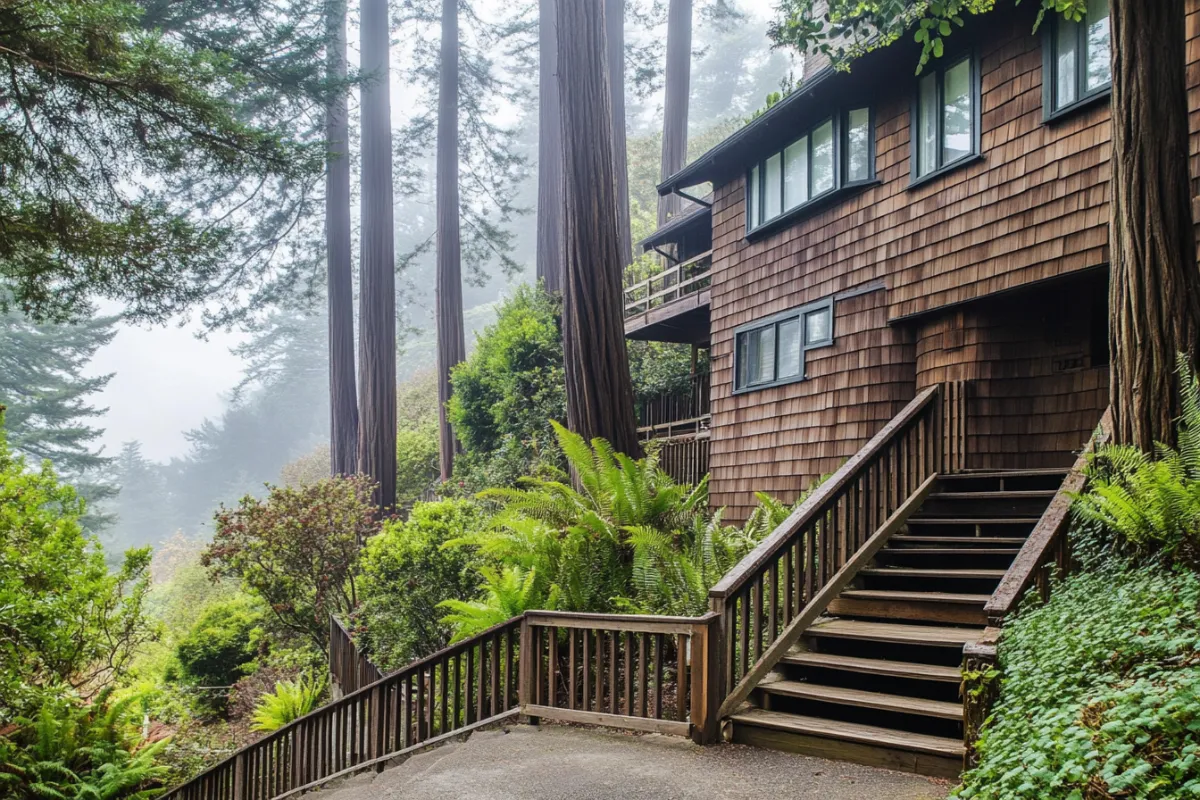
Our crews know how to work these lots, lowering wood by rope and carrying it out when no truck can get close. We handle tree trimming and pruning, removals and defensible space clearing all over town. Call us and we'll make the drive up the hill to look at your trees.
Redwoods, Bays and Steep Lots
Coast redwoods are tough, but they're tall and shallow-rooted, and on a slope with saturated soil they do sometimes go over. More often, they drop big dead branches from high up. Bay laurels grow in tight clusters, lean toward the light and split at weak unions as they get heavy. Both kinds of trees often sit right above roofs, stairs and decks on Mill Valley's hillsides. Bay laurels also host the sudden oak death pathogen without dying from it, so a crowded bay next to an oak can be part of the problem. Thinning or removing bays near valuable oaks is one way arborists slow the spread. Working them means a climber, careful rigging and a lot of hand-carrying, since lifts rarely fit. Neighboring San Anselmo has the same steep, wooded streets and the same mix of trees, and the same careful approach applies there.
Mill Valley's Heritage Tree Rules
Mill Valley has some of the most detailed tree rules in Marin. Heritage trees are set by species and trunk size, measured four and a half feet up: tanoaks at about 20 inches across, oaks and madrones at about 24 inches, and coast redwoods at about 30 inches. Taking one out requires a permit from the city. On a developed lot, removing four or more trees over about six inches across in a year needs a permit too, and on vacant land the line is about four inches. The city also counts heavy pruning as removal: taking more than a third of a tree's foliage in 12 months is treated as removing it. That's one more reason to trim lightly and often, and why we plan our tree removal jobs around the permit first.
Common Questions
Four native species get heritage status once they reach a set size at chest height: tanoak, oak, madrone and coast redwood, with redwoods needing the biggest trunk before they qualify. Other trees can be added by the council. On a lot with a house on it, taking out several medium-size trees in the same year also triggers a permit, even if none of them is a heritage tree.
Once pruning goes past a third of the leaves within a year, Mill Valley treats it the same as removal. The same goes for work likely to kill the tree or permanently harm it, topping included. Normal trimming below that line doesn't need a removal permit. For a big heritage tree, we keep pruning well under that limit and spread larger work over more than one year.