
Hazard Tree Assessment in Marin County
Find out if that big tree is a real problem before the next storm.
Free estimate, no obligation.
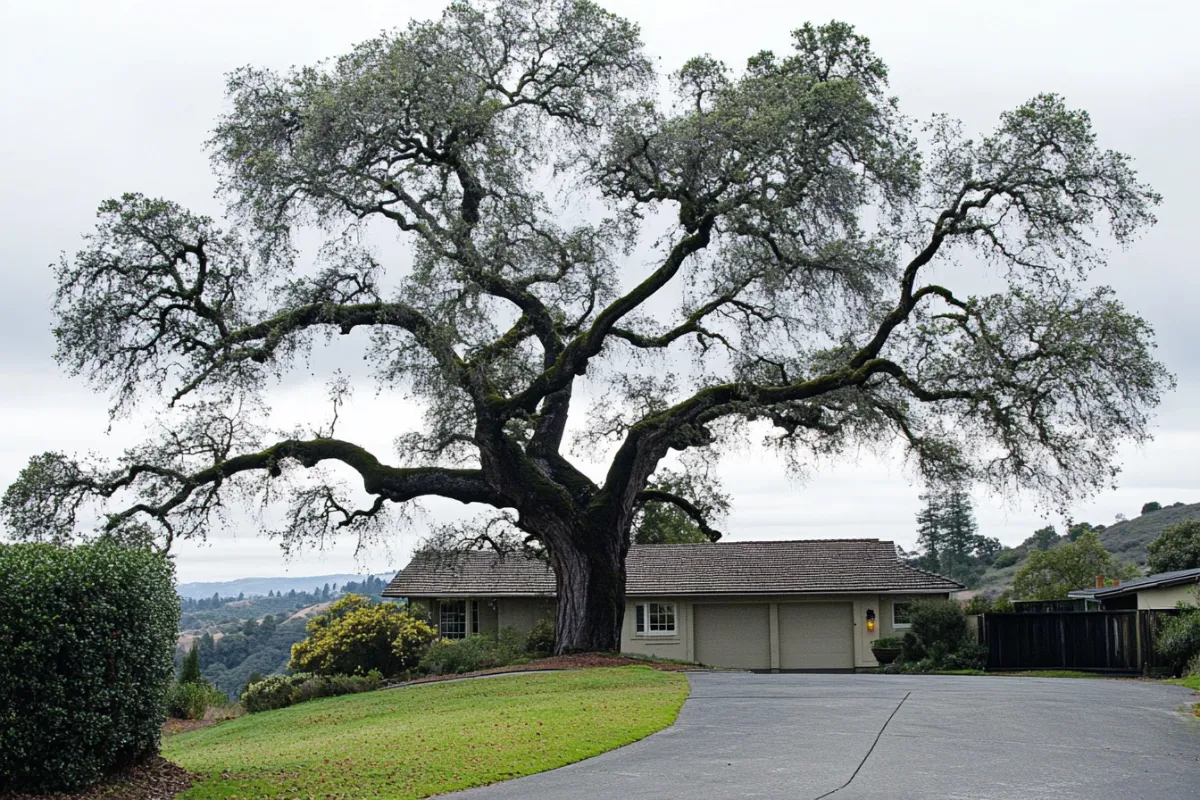
or get a free estimateA lot of Marin homes sit under trees that are older than the houses. A 100-year-old oak in Kentfield, a stand of redwoods behind a cabin in Fairfax, a blue gum eucalyptus that's been leaning over the same driveway for as long as anyone remembers. Most of them are fine. Some aren't, and from the ground it can be hard to tell which is which. That uncertainty is what keeps people up at night during a storm. A proper check replaces the guessing with a clear answer, and most of the time that answer is good news.
On this page you'll find the warning signs to watch for, how a tree risk check actually works, what happens during our visit, and what we tell you afterward. If the assessment turns up a tree that needs to go, we can handle the tree removal as well.
Questions about a tree?
Call TRACKING NUMBERWarning Signs Worth a Closer Look
Some signs are easy to see from your yard. A lean that's new or getting worse, especially with cracked or raised soil on the far side of the trunk. Long cracks running up the bark. Mushrooms or conks, the shelf-like growths, on the trunk or the roots, which usually mean rot inside. Big dead limbs in the upper canopy. Bark falling away in patches. Two main trunks splitting apart at a tight V. For oaks and tanoaks, dark oozing sap on the lower trunk can be a sign of sudden oak death, which is widespread in Marin's woodlands. Roots matter as much as the trunk. Construction near a tree, a new driveway or trenching for utilities can cut roots on one side, and the tree may not show any damage for a few years. If there's been digging near a big tree, mention it when you call.
How Tree Risk Is Judged
Professional arborists look at risk in three parts. The first is how likely the tree, or part of it, is to fail. The second is how likely it is to hit something if it does, since a dead limb over an empty hillside is very different from the same limb over a bedroom. The third is how bad that impact would be. Put together, those three answers give a risk rating from low to extreme. It's the same basic approach the International Society of Arboriculture teaches, and it keeps the decision about the tree's real situation instead of how scary it looks. A big leaning oak in the far corner of a lot can be a low risk, while a smaller tree with a cracked trunk over a bedroom can be a high one.
What Happens During the Visit
We walk around the tree and look at it from every side, from the root flare at the base all the way up to the crown. We check the trunk for cavities and cracks, sound it with a mallet to listen for hollow spots, and look at the soil and roots for signs of movement or rot. We note what the tree would hit if it failed. Most visits take less than an hour per tree. If a tree needs a deeper look than we can give it from the ground, we'll tell you that too. That might mean a climb into the crown to check a crack up high, or a closer look at the root zone. It's not needed often, and we'll explain why before suggesting it.
What You Get Afterward
You get a plain answer, not a sales pitch. For each tree we tell you whether it looks sound, needs work like pruning or thinning, needs to be watched, or should come out. If something needs doing, we explain why and what it costs. Some Marin towns ask for a written report from a qualified professional before a protected tree can be removed, and we can tell you whether that applies to your tree. If nothing needs doing right now, we'll say so and suggest when to have it checked again, usually after a few winters or after any big storm.
When the fix is lighter work instead of removal, our tree trimming and pruning crews take care of it.
Frequently Asked Questions
Look for a new or worsening lean, cracks in the trunk, mushrooms or shelf-like growths at the base, large dead limbs and soil lifting on one side. Any one of those is worth a professional look. A tree can also be risky without obvious signs, especially if it's large and close to the house, so if a tree worries you, it's worth having it checked.
For a single tree, usually well under an hour on site. A property with many large trees takes longer, since each one gets looked at from the roots to the crown. We talk through what we found while we're there, so you don't have to wait days for an answer on whether a tree is safe.
Yes. A tree can have a full green canopy and still have decay hidden in the trunk or roots, or a weak split between two main stems. That's why a real assessment checks the structure and the roots, not just the leaves. Healthy foliage is a good sign, but it doesn't tell you whether the trunk can hold the weight above it.
Call for a free estimate
Call [TRACKING NUMBER]