
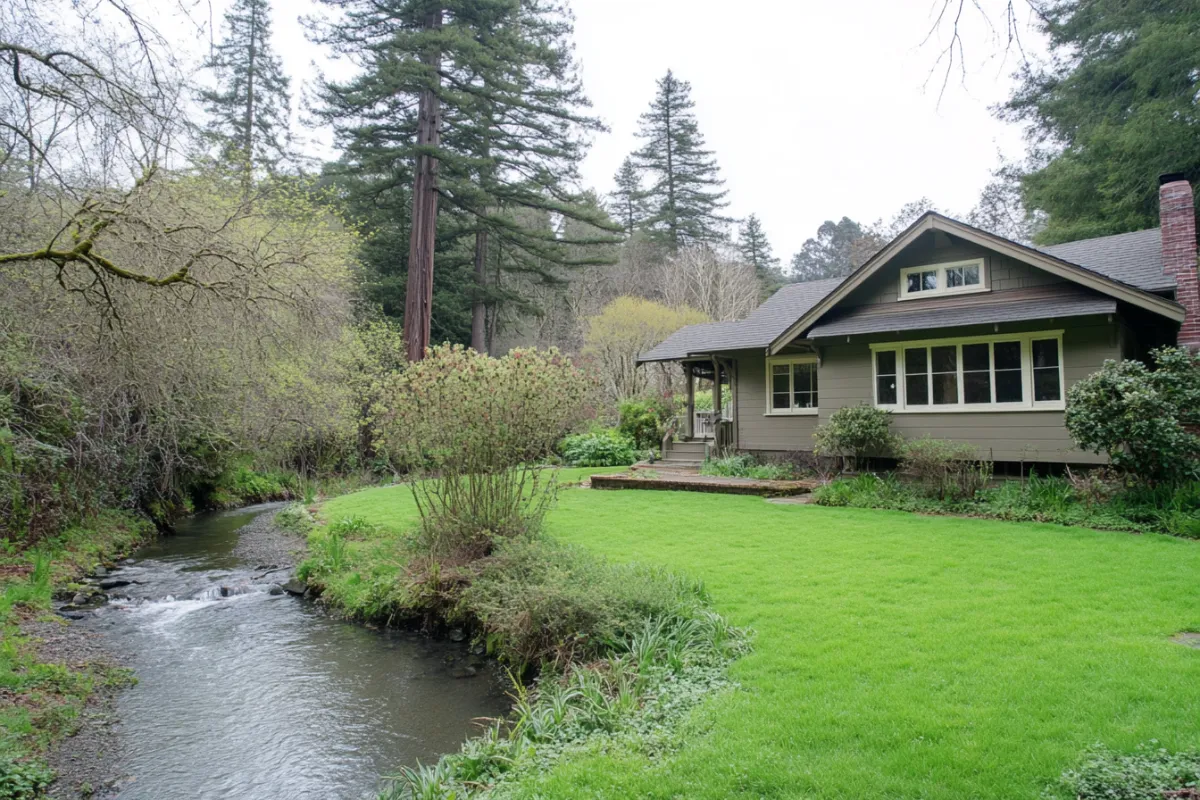
San Anselmo is the heart of the Ross Valley, and its trees grow wherever the hills and the creek let them. Bay laurels and big redwoods fill the banks of San Anselmo Creek, oaks and madrones climb the steep streets on both sides of town, and older homes in neighborhoods like Seminary Ridge and Sunny Hills sit under canopies that have been growing for a century. The valley floor stays damp through winter, and when the creek runs high, the soil along its banks softens and big trees lean. Up on the hillsides, tight lots and narrow roads make every job a puzzle of where to park the chipper and how to get wood down to it.
We take care of oak pruning, tree removal on creekside lots and storm cleanup all over town. Our crews also do a lot of defensible space work on the upper streets that back onto open space. Phone us for a free estimate. We'll check the trees and the access before pricing anything.
Creekside Trees and Saturated Soil
Trees along San Anselmo Creek have plenty of water, which makes them big, but their roots also sit in soil that turns soft after a few days of steady rain. That's when trees along the banks are most likely to tip, and when undercut banks expose roots that used to be buried. Bay laurels are common here and grow in leaning clusters that get heavier every year. If you have a big tree near the creek, look at the bank below it after each storm season. Fresh soil loss or exposed roots on the water side are worth a professional look. Work near the creek can also need extra care because of its banks and wildlife, so we plan those jobs carefully. Neighboring Fairfax, further up the same valley, deals with many of the same creekside trees. Before you add a retaining wall, a deck or new landscaping near a creekside tree, check with us so the roots that hold the bank together don't get cut.
San Anselmo's Tree Permit Rules
San Anselmo regulates trees on private property under its own ordinance. On a developed lot, a heritage tree needs a permit before it can be removed, and the town calls a tree heritage once its trunk reaches 22 inches across at chest height. Acacias and trees the town has named as nuisances are left out. On an undeveloped lot, any tree with a trunk seven inches across counts. Cutting roots or raising the soil around a protected tree in a way that harms it needs a permit too. When an application comes in, neighbors within 300 feet are notified, and the permit has to be posted out front while work is underway. If you're not sure whether a tree qualifies, a tape measure and our hazard tree assessment will answer most of it, and we'll figure out the rest together.
Common Questions
On a developed lot, the line is a trunk 22 inches in diameter at chest height, which makes it a heritage tree. Acacias and town-listed nuisance trees don't count. On vacant land the bar is much lower, at seven inches. The town notifies neighbors within 300 feet when someone applies, so build in some time before you plan the work.
Ross Valley Fire Department handles defensible space inspections for San Anselmo and Fairfax. Inspectors look for branches near roofs and chimneys, dead plants and dry fuel close to homes. If you get a notice, it lists the items to fix, and we can work from that list directly so you pass the follow-up.